
 519-646-2222
As Good as Gold
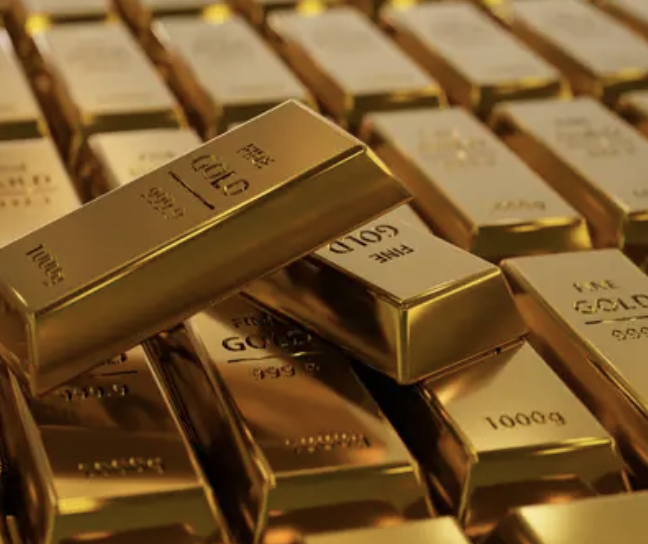
The expression “as good as gold” should be as familiar to people as “the price of real estate never goes down” – both are historical fallacies. The bursting of the most recent, and largest, real estate bubble was only a surprise to people who were unable to recognize or understand other parts of the economy – such as inflation, income degradation, excessive taxation, and above all rapidly escalating consumer debt.
Interestingly the experts we look to for financial advice are invariably the least likely to provide good, factual, information. Realtors are are very well paid to sell you a house for the highest price you can pay – their livelihood depends on it. So it is less than likely they would tell you to wait for a prices to bottom out in a declining market.
Educational courses for investment advisors focus on regulation far more than predictive investing, most investment advisers are basically sales people selling products their company executives are pushing down the line. Investment advisers get paid by moving your money from one fund to another, not by sharing in the growth portion of your money.
Regulations were imposed on advisers in 2016 the CRM2 regulations were intended to address a lack of transparency in the investment industry, which left many investors unaware of the true costs of managing their money. Yet, even today most “investors” are still hoodwinked by complex statements and too much fine print – in the same way borrowers are by credit card payment terms disclosures.
Economists, are people who have trained in economic modelling, or economic theory – their background is mostly mathematics and statistics. They study failure, for example, how and why the Great Depression occurred and what they might have done differently – with full hindsight they create models to isolate economic elements and replace them with others to theorize alternate outcomes.
Economists are always wrong, in fact there are so many of them around that if they could make accurate calculations about economic outcomes we would never have any economic bubbles or pitfalls. Economists mostly work for government organizations or large corporate interests such as banks. We can thank economists for the poor state of our economy today.
So, back to gold and just how true is the old saying as good as gold? The price of gold was set, following the 1971 removal of the gold standard for the US dollar to a 1973 book value of just over $42.00 per ounce. You may recall President Trump blowing off steam in the media about “gold missing from Fort Knox“. In February of 2025, Trump explicitly raised the possibility of theft, asking, “Did anybody steal the gold in Fort Knox?“. He also stated, “If the gold isn’t there, we’re going to be very upset“.
Perhaps there was no chapter in “The Art of the Deal” (book by Donald Trump) on market value versus book value. Apparently Trump and his staff were looking at the present market price of gold at $2,876 per ounce and comparing that to the unadjusted book value of $42.00. Even after adjusting for inflation the 1973 market price of $110.00 only amounted to $741.00 per ounce, far less than today’s run away market price.
By 1980 the price of gold had risen to $850,00 per ounce and as we entered the past few years the price, driven by fear of a collapsing economy and the failure of our banking system encouraged people to buy “tangibles” such as precious metals. Costco got in on the game selling small gold bars to attract customers into their stores.
Today, gold is selling at about $5,000 per ounce, on the face of it, using a nominal price adjustment that is a 600% mark up – or is it? No, don’t be silly, first adjust the $850.00 you spent in 1980 for inflation – that $850 in today’s money would have the same buying power as $3,036. After making the inflation adjustment – which few people ever do – the mark up on the gold you bought in 1980 is about 39% or less than 1% per year.
On the other hand if in 1980 you had invested $850 in the S&P 500 – with an average rate of return of about 10% – your investment would be worth around $68,000 today an inflation adjusted increase of 8,000%. The other concerns with gold include the possibility of confiscation.
“The US government confiscated gold in 1933 under Executive Order 6102, signed by President Franklin D. Roosevelt on April 5 of that year. The order required citizens to deliver most gold coin, bullion, and certificates to the Federal Reserve by May 1, 1933, to combat the Great Depression. “
Let me remind you that today’s “Depression” (although not called that) is far worse, more impactful and longer lasting that the former “Great Depression” – the key difference is that in 1929 people did not have access to skyrocketing consumer debt to purchase necessities. Absent access to debt very few Canadians could afford to live today.
A further caveat is the likelihood of Central Banks, which have also been acquiring gold, resetting the price to a lower value encouraging ordinary people to sell effectively forfeiting whatever money they had exchanged for the asset. Not only would people lose their money they will also lose their gold. Assuming the price is pushed down for an extended period of time we would witness another transfer of wealth from the pro and working classes to the very rich.
Be smart, be mindful that gold, like the real estate market, has seen many ups and downs – buy on the downs and sell on the ups, that way you’ll have some form of money, digital or otherwise, to take advantage of the coming AI bubble…