
 519-646-2222
The New Middle-Class
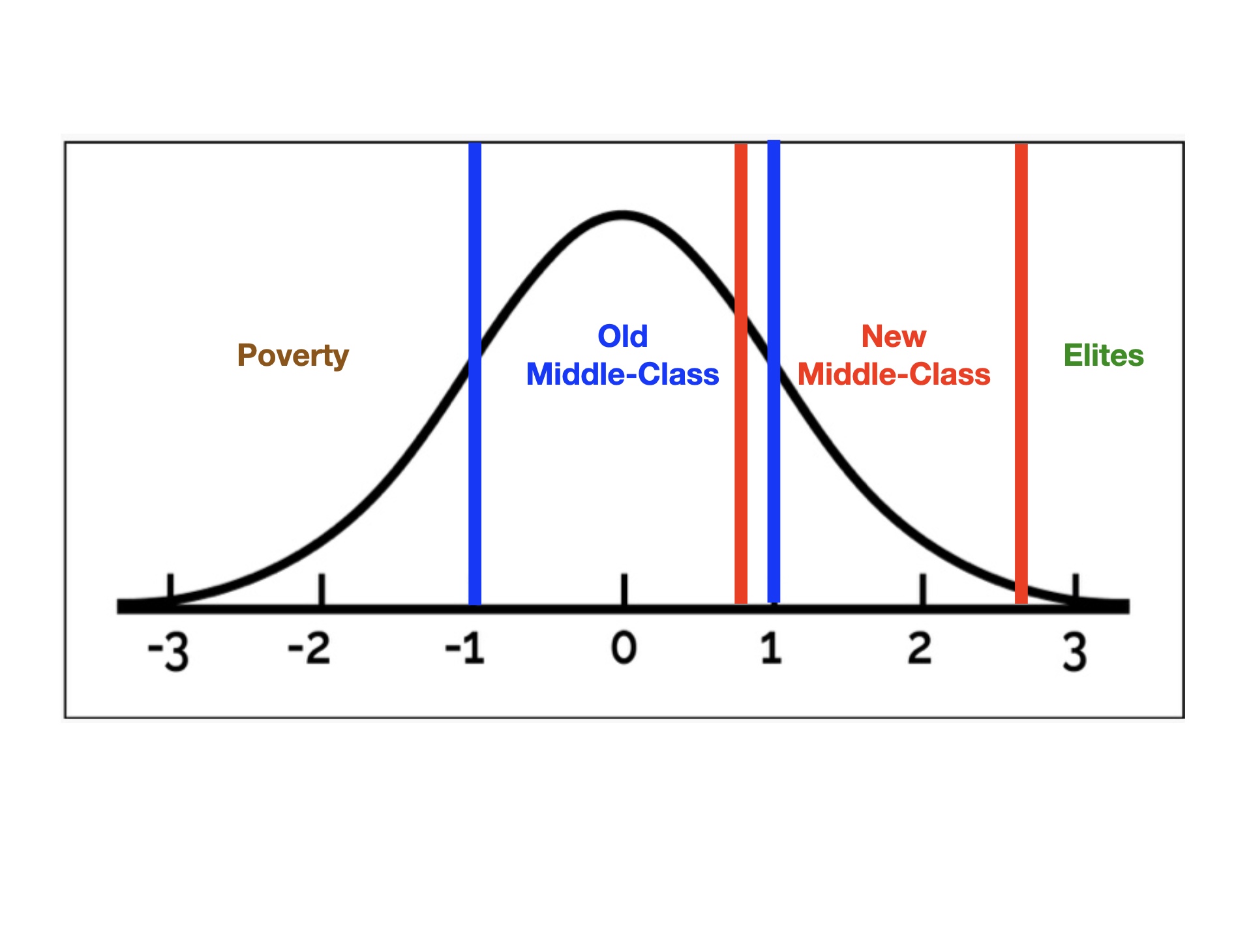
The new middle-class is to be defined differently, very differently than the old middle-class, not in terms of expectation, but in terms of accessibility. The middle-class was so called because if you fell within about one standard deviation of the median income you could expect to live a similar lifestyle to other income earners in that range.
Let me explain the concept, look at the “normal distribution” curve in the picture above as a reference point. It used to be that 68% of income earners fell within one standard deviation of the median – hence “middle-class” (between the blue lines). If you earned an income in that range you would have middle class expectations – albeit with considerable variability.
People across the range would all expect that they could afford a place to live, transportation, an annual vacation, food on the table and the ability to help their kids through post secondary education. The variability relates more to type than expectation – people at the lower end would rent their homes, people at the upper would purchase and have much nicer homes, and so on.
Those same middle-class expectations are still there only today the media and some people refer to it as “a sense of entitlement” – but that is absolutely not what it really is, that far to overly simplistic and divisive. The expectation is based on older norms passed down from parents and grandparents who really afford to live a middle-class lifestyle, before the advent of rampant inflation and the growth of the debt industry.
To be clear, a lot of people in that same income range are still living the “middle-class” lifestyle. However, they cannot afford to do so without reliance on massive and growing levels of debt, today’s people “living the dream” are doing so on next year’s income – they simply cannot possibly afford those simple, basic expectations with using debt.
Today’s real middle-class has shifted right (between the red liens) – they are people earning income above the eightieth percentile of income earners, and yet many of them are also wallowing in debt. Debt is the destroyer of economies and the Grim Reaper of the middle- class. Before the 1990s consumer debt was relatively manageable for most people, but it has grown at an insane rate during the past thirty years,
Today “debt” is the largest single industry in Canada and totally dwarfs manufacturing and the housing industries combined. And here is the bad news, without major systemic and political changes there is no going back – economists, at least the smart ones, know they are trapped in an economic death spiral of their own clever making – but try to get them to admit that!
Bankruptcies and proposals, as we have discussed previously, only provide temporary relief unless your income changes dramatically, someone and leaves you a large inheritance, or you win the lottery. As long as you are spat out of the process into the same economic environment, high inflation, decreasing incomes, lack of productivity, escalating taxes, you are doomed – plain and simple.
If you are young and educated and have yet to launch a successful career the best advice and elder can give you is “get out” because honestly there is very little opportunity in this country. Geography, and demographics both play into that reality – Canada, under several successive government pursued a course towards white-collarism, or consumerism – abandoning dirty blue collar jobs – the Chinese were cheaper, more efficient and produced good quality goods – our politicians dreamed of us becoming the global bankers and insurers – but it backfired.
Canada is a vast country some 41 times larger than England, but England has a population that is at least 60% larger than Canada’s. If you manufacture something in the west of England sell it in the east it can be there in hours not days. Companies are attracted to Canada only because of the massive corporate welfare in the form of indemnities, grants, subsidies and other relief the government (at all levels) provide – they are not coming here because we are a great place to do business. As a result the net benefit of many industries in Canada is negative to the taxpayers.
Canada has a sovietesque bureaucracy with government workers accounting for nearly 30% of the workforce and earning an average of 35% more than their industry colleagues – good if you can get it but can we afford to keep funding it?